On the 24/02/2020 I had my second meeting with Rob in which we feel that we have really moved forward in the planning of this collaboration.
I reflected on the warm ups and decided that I felt the live sound tracking idea would be the most suitable. I felt this way because it naturally incorporated music and would encourage the group to be more creative. I discussed this with Rob and we decided that there was therefore no need to test the warm up exercises in the Baton Beats session that evening.
We then started to plan the session more in depth. We decided that we would actually use the live sound-tracking as a 20 minute exercise within the session instead of the warm up and Rob would develop a warm up instead. We felt that this was a good idea as the activity has scope to be longer and this would mean everybody would have a turn. I explained some ideas that I had regarding the actions that the group would act out. Rob suggested that we could make it more humorous by adding an element of emotion into the activity. He believed we could do this by having emotion cards that are also drawn from a deck. Then they have to act out an action with a certain emotion. This will lead to the activity becoming more comical. Rob suggested that he might ask somebody to create a “wheel of fortune” style decider so the group can spin for their action/mood rather than draw it from a deck of cards. We also agreed that some actions would require more than one actor therefore including more people in the activity. This is also exciting as my role within the workshop is increased! Following this discussion I made a plan including the kit list. Please follow this link to view the plan: https://liveplymouthac-my.sharepoint.com/:w:/g/personal/emily_pembridge_students_plymouth_ac_uk/EQ4-C9mE3-lItlKHAUHzXEoB-zc3oPz4G0f3HcfiZRqoZw?e=S6txoJ
We then further discussed the cool down exercise. We felt that our agreed idea was perfect and felt that no modifications were needed. However, we did decide to allow people at the end to make sound with the ocean drum whilst everyone else closes their eyes and reflects on the session. This would act as a reward for being so silent with instrument whilst allowing the students to access a reflective mindset ready for the evaluation activity. I also made a plan for this, please follow this link to view it: https://liveplymouthac-my.sharepoint.com/:w:/g/personal/emily_pembridge_students_plymouth_ac_uk/EbWCucqAPuNPj19ERZCRAqoBT8NTkQDBWcrtbfZvU8OsBw?e=JX72Nu
Finally, we discussed the evaluation that I wish to carry out. On the 20/02/2020 I had a tutorial with Ed, the module leader. He suggested that using a questionnaire style evaluation will be difficult for me as I will have to gain permission from the school to gather this information due to GDPR (General Data Protection Rules). As you can see from the image below, there are six GDPR principles to follow to ensure accountability. Therefore I will be mindful of these at all times throughout the evaluation process.
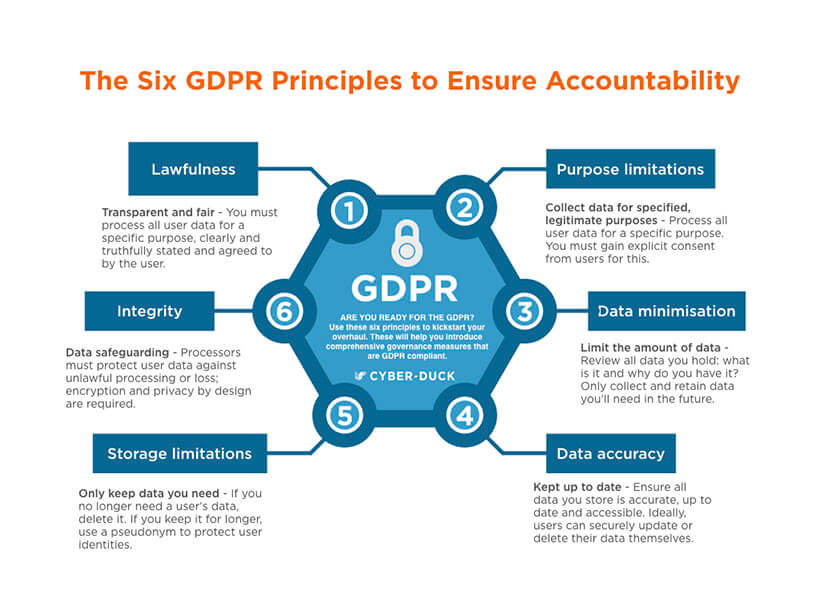
He suggested that by using physical methods such as having the pupils stand on sides of the rooms that correspond to different answers, I would not need the schools permission as the data is not recorded. Therefore, GDPR becomes less of a concern. Furthermore, I would only be evaluating a general consensus. I would still fill out the university ethics forms just as a precaution. I explained this to Rob and he agreed that this was the best idea, he also said that the questions I wished to ask were similar to those he wished to ask, therefore making the evaluation section of the session valuable to both of us. Please follow this link to see the plan I developed: https://liveplymouthac-my.sharepoint.com/:w:/g/personal/emily_pembridge_students_plymouth_ac_uk/EVuTm2uhYaJBs-DqBDKCLOMB4XitfFgi8SmIsNhKjMNpzw?e=uUCGtN
Through our second meeting we continued to engage with the Seven Keys of Collaboration (Spencer, 2017). We felt empowered through working towards our shared vision by developing the structure, and having fun. Our candour, dependability and trust enabled us to communicate more freely in the meeting. This has improved my collaborative confidence. Due to our improved communication, our conversations are becoming more useful and productive. Anderson (2012, pp.8-24) believes that collaborative partners who have good conversations are able to develop new creative knowledge that neither could have developed on their own. This may be why we felt so positive and inspired following our meeting. I feel that the experience thus far has changed my outlook on collaboration as prior to this, I disliked the thought of working with someone as the idea of relying on people frustrated me.
I have sent these plans to Rob and am awaiting a response. The next step in the planning is to fill out the ethics form once Rob finalises my evaluation plan. We still need to develop the theme for the activity that Rob has planned which is the collective improvised composition. Before I begin thinking about this, I am waiting on Rob to send me the samples that he collected in a previous session so I can suggest themes that link to the current ideas.
Reference List
Anderson, H. (2012). Collaborative Relationships and Dialogic Conversations: Ideas for a Relationally Responsive Practice. Family Process, 51(1).
Cyber-Duck. (2017). Get to Grips with the Basics of GDPR. [online] Available at: https://www.cyber-duck.co.uk/insights/introducing-gdpr-the-basics-of-the-new-data-protection-regulation [Accessed 25 Feb. 2020].
Spencer, J. (2017). The 7 Keys to Creative Collaboration. YouTube. Available at: https://www.youtube.com/watch?v=2DmFFS0dqQc [Accessed 8 Feb. 2020].
 Emily Pembridge MUS634