Since the workshop means that I will be working with children and vulnerable adults, I feel it is necessary to familiarise myself with the basics of safeguarding for both adults and children. I am already safeguarding trained as I undertook a training day last year within my job back home. My role is a play worker for children with serious neuro-developmental difficulties and disabilities. As this training took place last year, I have given myself a short refresher. I will summarise my understanding within this post.
As written on the NSPCC website, child safeguarding is any action that is taken that aims to promote the protection, welfare and safety of children. Safeguarding means;
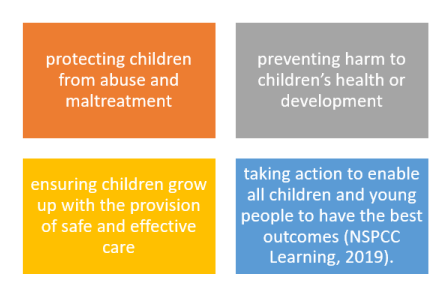
According to Keeping Children Safe, to safeguard you must be aware and vigilant of the signs of sexual abuse, physical abuse, child sexual exploitation, commercial exploitation and of any potential risks that the environment has that the children might come into contact with. I must be aware who to report to if I have any concerns, in my case, this would be Rob as he is the workshop lead. Furthermore, I must also be mindful of the use of media hence why I wish to make the school aware that I want to audio record the session. If the school object then I will not follow through with the audio recording.
Luckily, as I am collaborating with PMZ, there will already be an agreed safeguarding policy in place. Furthermore, the Creative School students will have teachers who are supporting them throughout the workshop. I will personally implement safeguarding by embracing and accepting any rules I have been given prior to the session, such as only having one person in the kitchen/toilets at one time and no members of staff being alone with the children.
To familiarise myself with adult safeguarding, I have read the online document presented by the NHS. Safeguarding means protecting the person’s right to live without harm and in safety. In 2014, the government implemented the care act in which each local authority must follow. The aims of safeguarding in adults is to;
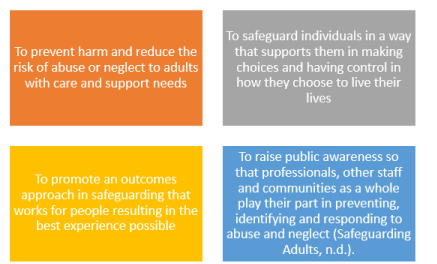
Like child safeguarding, I must be aware of all forms of abuse, modern slavery, financial or material abuse, neglect and self neglect. Once again I must also ensure that I make the trust aware of any audio recording that I wish to carry out. As previously mentioned, the Highbury Trust support workers will be present so there will already be safeguarding procedures in place, similar to those of the Creative School.
Ultimately, I must be mindful of any potential risks, harm or suspicions I may have surrounding the safeguarding and well being of the children and the adults who I will be working with. I must know who to report to and the signs to look out for if something is wrong. I must look out for myself and others by following any rules and boundaries that PMZ, the Creative School or the Highbury Trust inform me of.
Reference List
NSPCC Learning. (2019). Safeguarding children and child protection. [online] Available at: https://learning.nspcc.org.uk/safeguarding-child-protection/. [Accessed 08 Mar. 2020]
Safeguarding Adults. (n.d.). [online] Available at: https://www.england.nhs.uk/wp-content/uploads/2017/02/adult-pocket-guide.pdf. [Accessed 08 Mar. 2020]
 Emily Pembridge MUS634